
The Jewel Discourse: Truth Statements on the Qualities of the Triple Gem
รตนสุตฺตํA recitation that names the qualities of the Buddha, Dhamma and Saṅgha one by one, each ending "by this truth,…


สีวกสุตฺตํ
Illness and feelings can arise from eight causes, and past kamma is only one of them — the Buddha rejected the belief that everything comes from past kamma.
In the Sīvaka Sutta of the Vedanā Saṁyutta, the wanderer Moḷiya Sīvaka asks the Buddha: some ascetics and brahmins say that whatever pleasant, painful or neutral feeling a person experiences, all of it is caused by what was done in the past. What does the Blessed One say?
The Buddha answers that some feelings arise from bile, some from phlegm, some from wind, some from a combination of these, some from change of climate, some from careless behaviour, some from assault, and some as the result of kamma. One can know these things oneself, and they are accepted as true in the world. So those ascetics and brahmins who say everything comes from past kamma overshoot what they know themselves and what the world accepts as true.
In the Devadaha Sutta of the Majjhima Nikāya, the Buddha rejects the Jains' view that all pleasure and pain come from past kamma, with similar reasoning.
Some feelings originate from bile.
Physical symptoms have physical causes. Consult a healthcare provider first.
Some feelings originate from phlegm.
Observe your body to learn which symptoms recur and why.
Some feelings originate from winds in the body.
Many discomforts ease by adjusting eating, sleep and movement.
Some feelings arise from several causes together.
Most problems in life have multiple causes. Don't rush to blame a single one.
Some feelings arise from changes in the weather.
Body and mood often fluctuate as seasons change. Take extra care of yourself instead of worrying that something is wrong with your life.
Some feelings arise from not looking after the body properly — eating, sleeping or exerting oneself out of balance.
This cause is directly in your own hands. Before blaming fate, look at your own habits.
Some feelings arise from the actions of others or other external harm.
Victims of harm don't always "deserve it" because of past kamma. Never say this to someone who has been hurt, and help where you can.
Some feelings arise as the ripening of kamma — just one of eight causes, not the cause of everything.
You can believe in kamma without attributing everything to past kamma. What you can control is the kamma you make now. See also "The Four Unconjecturables".
This teaching matters greatly in societies where people say "it's their kamma" when someone is ill or meets misfortune. Such beliefs can lead people not to see a doctor, not to look after themselves, or not to help victims of harm.
The Buddha didn't deny that kamma bears fruit, but said it is only one cause among many. When ill, treat the physical causes; when you see someone harmed, help; and don't use kamma to judge anyone's suffering.
Tap to read the actual passage on the page cited.
A recitation that names the qualities of the Buddha, Dhamma and Saṅgha one by one, each ending "by this truth,…

A quail that strayed from its range was seized by a hawk, but escaped once back in its own ploughed field. A g…

Living on alms is the lowest of livelihoods, yet clansmen go forth because they see suffering, not to escape d…
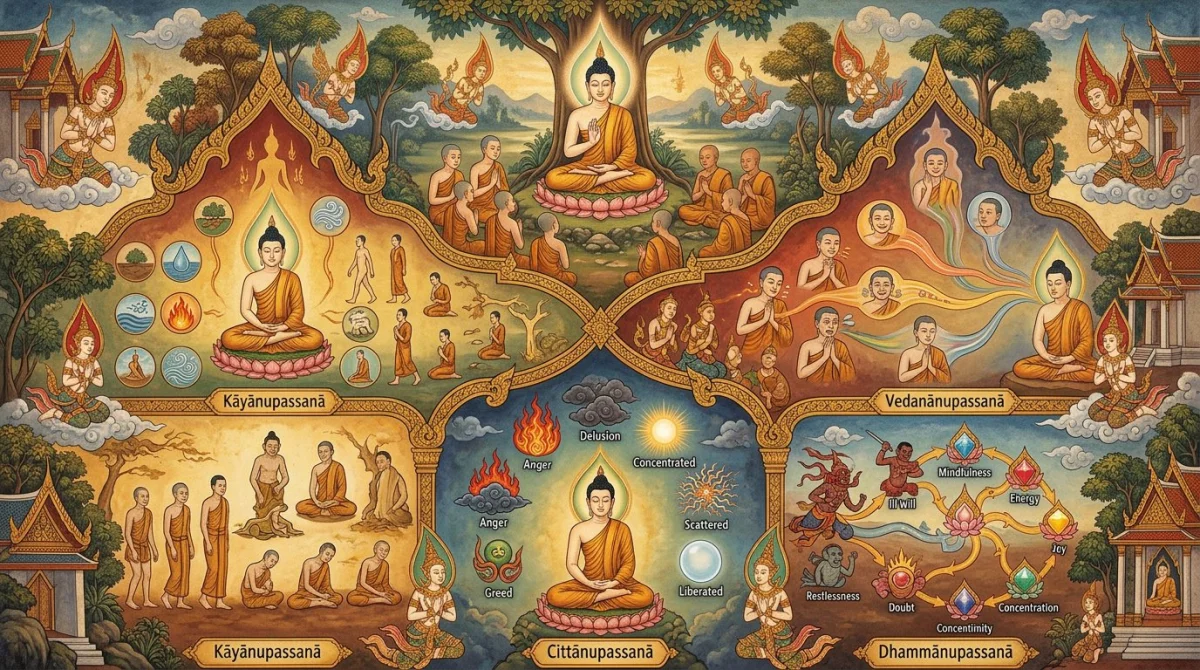
The Paṭisambhidāmagga explains the four foundations of mindfulness as contemplating body, feeling, mind and ph…