
The Nuns' Analysis: Jealousy That Harasses the More Gifted
ภิกฺขุนิยา สญฺจิจฺจ อผาสุํ กเรยฺยJealous of Bhaddā Kāpilānī, who was more highly regarded, the nun Thullanandā deliberately disturbed her, gave…


มคฺคกฺขายี ตถาคโต
Training in the Dhamma is gradual, like a staircase. Why then do some reach nibbāna and others not? Because the Buddha only shows the way, like someone giving directions to Rājagaha.
In the Gaṇakamoggallāna Sutta of the Majjhima Nikāya, the brahmin accountant Moggallāna observes that Migāra's Mother's palace was built in stages, and that brahmin learning, archery and accountancy are all taught step by step. Is there gradual training in this Dhamma and discipline?
The Buddha says there is, and describes it: restraint in virtue, guarding the sense faculties, moderation in eating, devotion to wakefulness, mindfulness and clear comprehension, dwelling in seclusion, abandoning the five hindrances, up to jhāna.
The brahmin asks whether all disciples attain nibbāna. Some do, some don't. When he asks why, given that nibbāna exists, the path exists and the guide exists, the Buddha asks in return: if someone asked you the way to Rājagaha and you explained it in detail, and one person took the wrong road while another arrived safely, what could you do? The brahmin replies, "I am only one who shows the way." The Buddha says the Tathāgata too is only one who shows the way.
Like building a palace or learning accountancy step by step, training in the Dhamma starts with virtue, then restraint of the senses, moderation in eating, wakefulness and mindfulness, up to concentration.
If meditation isn't working, look back at earlier steps: are your sleep and eating balanced yet?
On seeing a form with the eye, one doesn't grasp at it in a way that lets unwholesome states flow in; and one eats reflecting that food is to sustain the body, not for intoxication.
Before opening an app or snacking without thinking, pause for one breath and ask what it's for.
The monk purifies the mind of hindrances by walking and sitting through the day and the first and last watches of the night, lying down mindfully in the middle watch. This wakefulness means not letting time drift by aimlessly.
For lay people, have a short period of full wakefulness each day, such as ten minutes after waking before touching your phone.
The one giving directions to Rājagaha explained correctly and in detail; still, some took the wrong road and some arrived. A guide can only point the way. The Buddha says the Tathāgata is likewise only one who shows the way.
Stop waiting for a teacher or book to change you. Ask yourself whether you've taken a step today on the path you already know.
"What can I do?" is not indifference but an acknowledgment that the results of teaching also depend on the learner's practice. A good teacher gives the clearest directions possible, then doesn't carry guilt beyond their share.
When a child or team member doesn't follow your advice, check whether you explained clearly enough. If you did, respect their choice.
This discourse lifts two burdens. For learners: no one can walk the path for us, however good the teacher. For teachers: once you have shown the way as well as you can, the outcome for each person is not entirely in your hands.
Parents, teachers or managers who feel guilty when those they guide don't turn out as hoped may find relief in the Buddha's answer — while also being reminded to give directions as clearly as possible.
The gradual training also says you needn't start with deep concentration. Begin with virtue and looking after your senses in daily life.
Tap to read the actual passage on the page cited.
Jealous of Bhaddā Kāpilānī, who was more highly regarded, the nun Thullanandā deliberately disturbed her, gave…
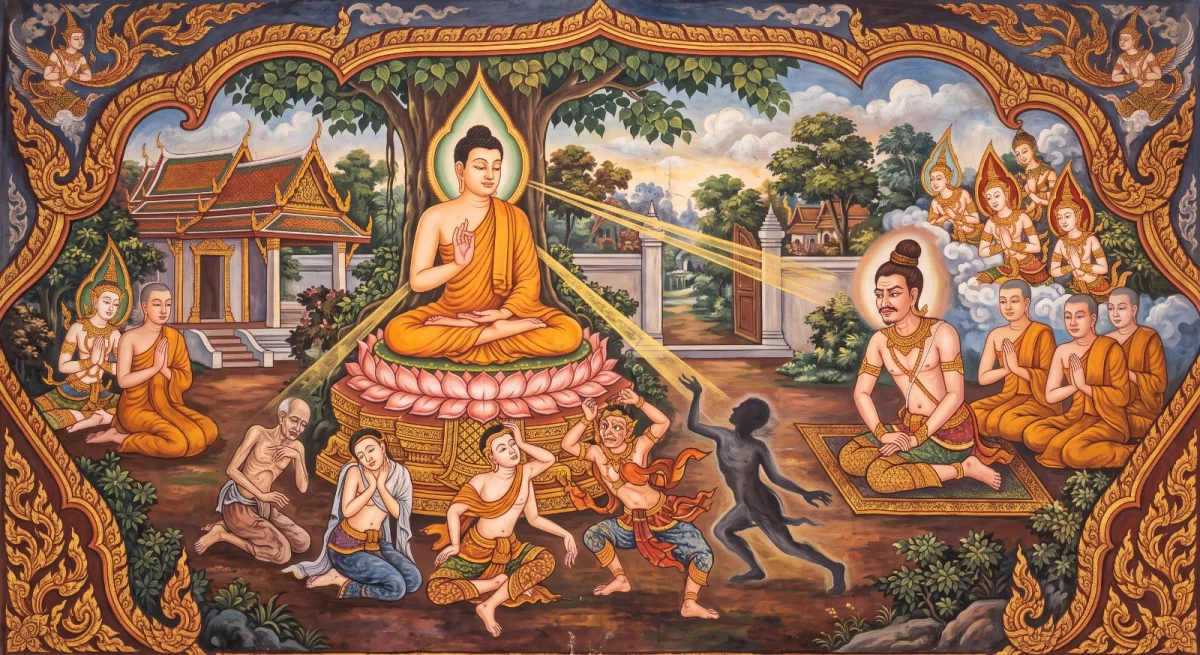
The debater Saccaka set out to refute the teaching of non-self. The Buddha asked: if form is your self, can yo…

The past lives of Venerable Mahākaccāna in two Apadāna passages: a hermit who heard the Buddha praise a discip…

Sunakkhatta renounces the training because the Buddha hasn't performed miracles or explained the origin of the…