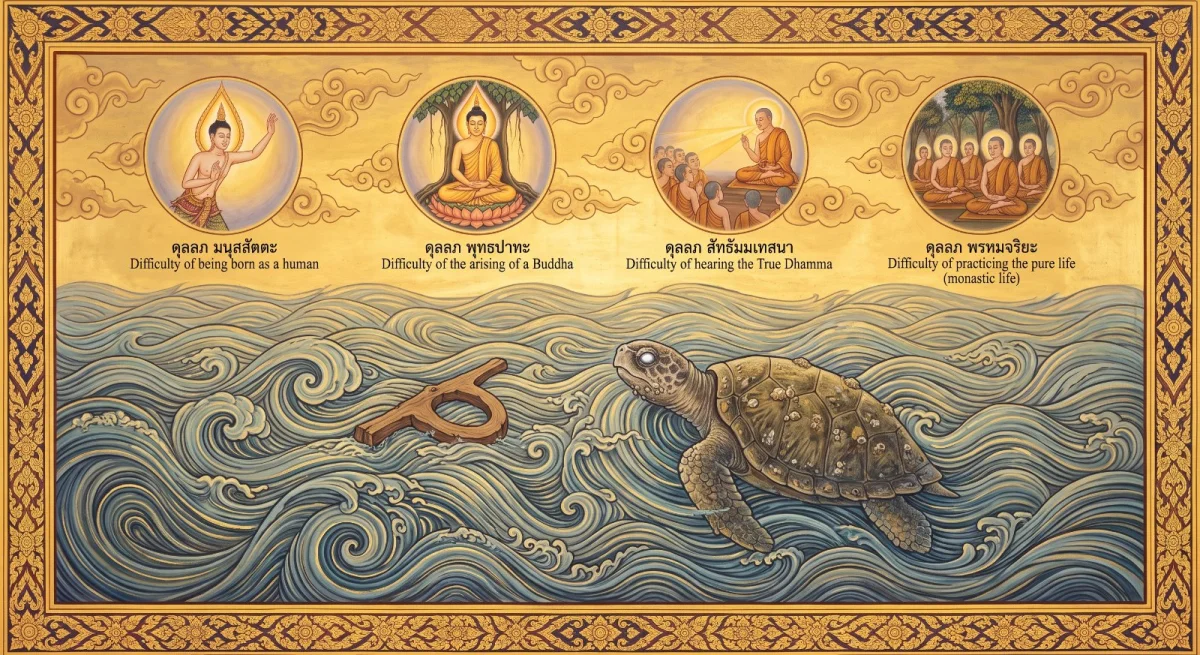
Four Things Hard to Obtain: The Blind Turtle
กิจฺโฉ มนุสฺสปฏิลาโภFour things rarely obtained — human birth, staying alive, hearing the true Dhamma, and the arising of a Buddha…


มหาทุกฺขกฺขนฺธสุตฺตํ
Everything has three sides to see in full — what is gratifying, what is dangerous, and the way out. The Buddha lays out all three for sense pleasures, form and feeling.
In the Mahādukkhakkhandha Sutta of the Majjhima Nikāya, wanderers of other sects claim that they too teach full understanding of sense pleasures, form and feeling — so what's the difference? The Buddha says to ask them in return what the gratification, the danger and the escape of these are, which they will be unable to answer.
He then explains: the gratification in sense pleasures is the pleasure and joy arising from the five strands of sense pleasure. The danger is the hardship of earning a living, grief when effort fails, anxiety when it succeeds, sorrow at loss, quarrels up to war, wrongdoing and punishment, and a bad rebirth. The escape is removing desire and lust for sense pleasures.
He applies the same analysis to form and feeling — the beauty of a young woman is the gratification in form; ageing, sickness and the corpse are its danger.
The pleasure and joy arising dependent on desirable sights, sounds, smells, tastes and touches. The Buddha doesn't deny this happiness is real.
Admit honestly that what you like brings real happiness. Denying this side turns practice into unsustainable suppression.
For sense pleasures people toil through heat and cold and endure hunger. If they fail, they grieve that their effort was wasted; if they succeed, they worry that kings, thieves, fire, water or unloved heirs will take it; and if they lose it, they sorrow.
Before setting a big goal, count the full cost — not just the price, but the exhaustion, the worry of having and the grief of losing.
With sense pleasures as the cause, kings quarrel with kings, mothers with sons, siblings with each other — up to war, robbery, punishment, and misconduct leading to a bad destination after death.
Many family conflicts start over property and wanting. Notice what relationships you're losing in exchange for what.
The escape from sense pleasures is the removal and abandoning of desire and lust for them — not running from objects, but setting down attachment in the mind.
Escape doesn't mean giving everything up, but that the mind no longer depends on it to be happy. Notice the happiness in moments when you want nothing.
The beauty of a young woman of fifteen or sixteen is the gratification in form; ageing, sickness and a corpse at its stages are its danger. Feeling in jhāna that harms no one is the gratification in feeling; its impermanence is the danger; abandoning desire is the escape.
Apply this to your own body: care for it and appreciate it, but know it changes, and don't tie all your happiness to appearance.
This three-sided view applies to every decision about happiness — a well-paid job, a new relationship, a big purchase, a favourite habit. Most people see only the first side; some see only the second and come to hate everything. Wisdom is seeing all three.
Try writing three columns for something you're deciding: what you gain, what it costs, and how you could put it down if you didn't need it. The third column is the one that sets you free.
Tap to read the actual passage on the page cited.
Four things rarely obtained — human birth, staying alive, hearing the true Dhamma, and the arising of a Buddha…

The middle way in eight factors, covering thought, speech, work and the training of the mind — and you can sta…
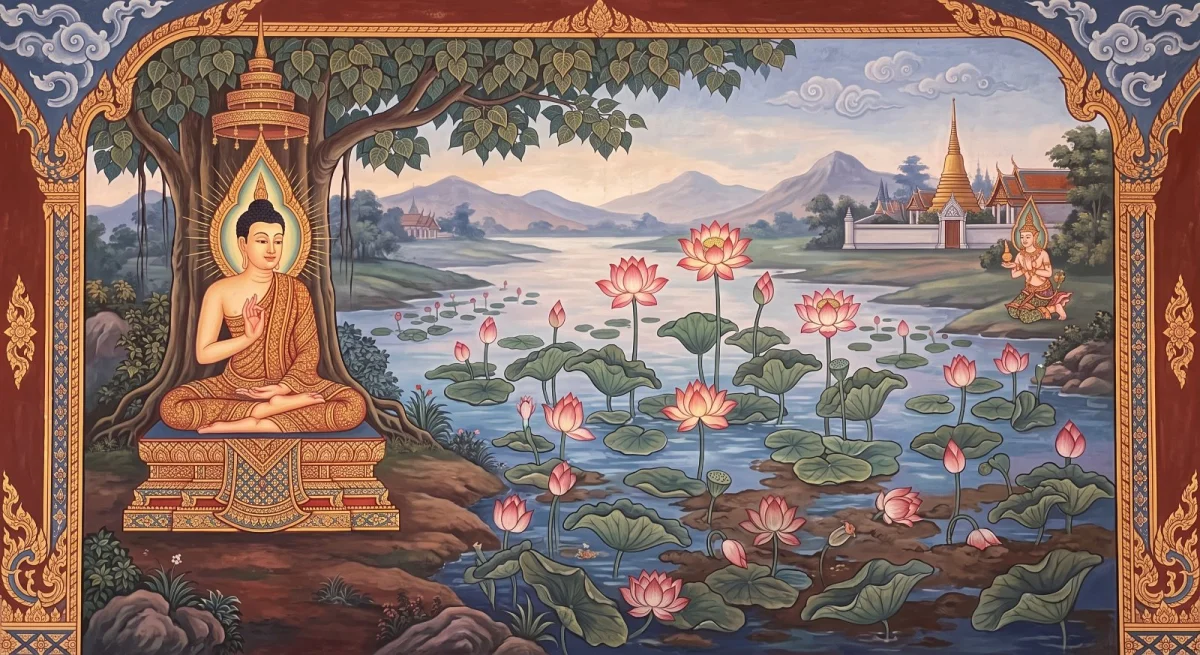
After awakening, the Buddha inclines not to teach, since the Dhamma is deep and people delight in attachment. …

Bhaddāli refused a training practice and avoided the Buddha for the whole rains retreat before finally admitti…