
The Discourse with Gopaka Moggallāna: No Successor, but the Dhamma as Refuge
โคปกโมคฺคลฺลานสุตฺตํShortly after the Buddha's passing, a brahmin asks Ānanda who the successor is. The answer is that there is no…


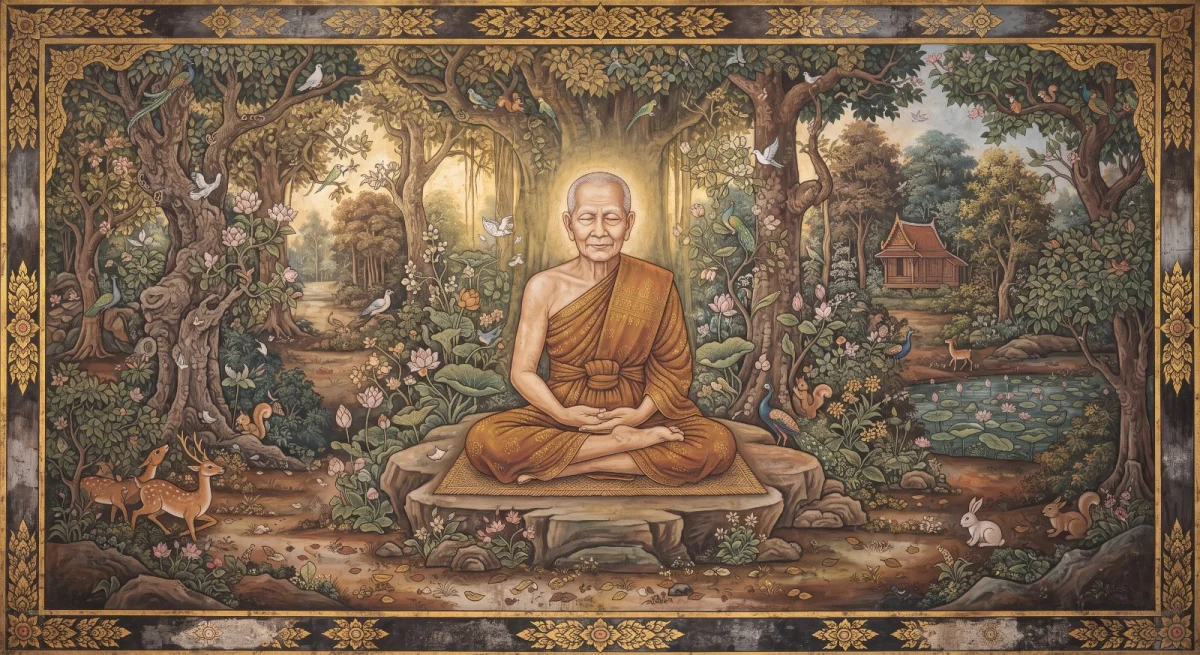
สิริมิตฺตตฺเถรคาถา
The Elder Sirimitta repeats four qualities five times, adding one more each time: guarded senses, good virtue, good friends and good wisdom. Such a person does not grieve in the next world, and one with faith, virtue, confidence and straight view is called not poor.
In the Book of the Eights of the Theragāthā, Khuddaka Nikāya, there are eight verses of the Elder Sirimitta. The first five all begin the same way: a monk who is not angry, not resentful, not deceitful and not divisive, and they end: such a monk does not grieve in the world beyond.
Each verse adds one more quality: being steadfast, having the sense doors guarded, having good virtue, having good friends, and having good wisdom. The repetition shows that the first four are a foundation that must always be present.
The last three verses say that one whose faith in the Tathāgata is unshakeable and well established, whose virtue is good, who has confidence in the Saṅgha, and whose view is straight, is called by the wise not poor; that person's life is not in vain.
The first two qualities repeated in every verse are not being easily angered, and, when angry, not keeping the anger tied up in the mind. Such a monk is steadfast and does not grieve in the world beyond.
Before bed, if you still have resentment towards someone, resolve to set it down for one night, without replaying how they were wrong.
The other two are having no deceit, not presenting oneself differently from how one is, and not speaking divisively to split people apart.
When you hear someone speak badly of another, don't carry it to that person, and don't pass it on to anyone else.
The second verse adds that a monk with these four qualities who always guards the sense doors does not grieve in the world beyond.
Choose what your eyes and ears take in each day, for example by turning off news alerts that provoke anger, since what enters through the senses fuels anger and harsh speech.
The third verse adds that a monk with these four qualities and good virtue does not grieve in the world beyond.
Pick one precept you find hard to keep, such as not lying even about small things, and keep it fully for a week.
The fourth verse adds that a monk with these four qualities and good friends does not grieve in the world beyond.
Think of a friend who makes you a better person, and find time to meet or talk with them more often.
The fifth verse adds that a monk with these four qualities and good wisdom does not grieve in the world beyond.
When something makes you angry or tempted to speak harshly, use wisdom to ask what the real cause is, instead of blaming the person in front of you straight away.
One whose faith in the Tathāgata is unshakeable and well established, whose virtue is good, loved and praised by the noble ones, who has confidence in the Saṅgha and whose view is straight, is called by the wise not poor; that person's life is not in vain. So the wise should devote themselves to faith, virtue, confidence and seeing the Dhamma.
On days when you feel you have less than others, count the inner riches you have, such as honesty or confidence in doing good. No one can take these away.
The elder's four basic qualities concern all our relationships. Being quick to anger and holding grudges damages our own mind, while deceit and divisive speech destroy others' trust. Someone free of these four needn't be wary wherever they are, and has nothing left on their conscience to grieve over later.
The verses on not being poor also offer a new view of wealth. Inner riches like faith, virtue and straight view cannot be stolen, and they keep a life from being wasted.
Tap to read the actual passage on the page cited.
Shortly after the Buddha's passing, a brahmin asks Ānanda who the successor is. The answer is that there is no…

The same situations, such as having work to do, having travelled, having eaten, or just recovering from illnes…
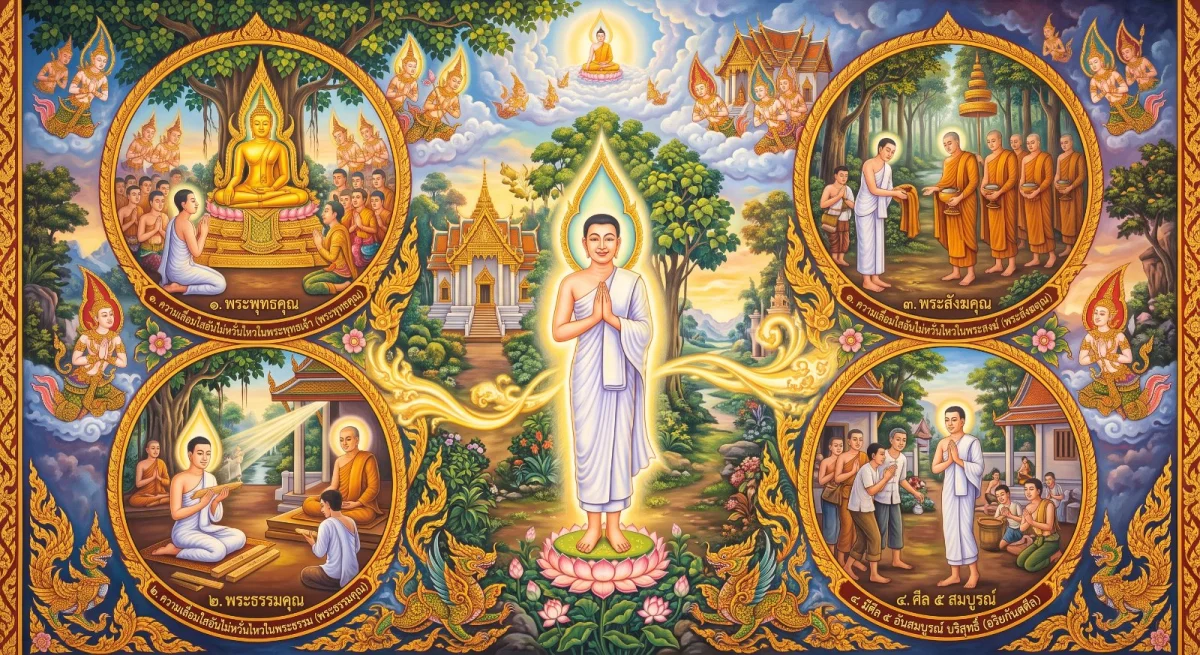
Four things the Buddha called finer than a world-ruler's treasures — unshakeable confidence in the Triple Gem,…

The wanderer Nigrodha mocks the Buddha, who responds by inviting him to ask about the wanderer's own austeriti…