
The Four Noble Truths
จตฺตาริ อริยสจฺจานิThe four truths at the heart of every teaching, laid out the way a doctor works: name the symptom, find the ca…


อลคทฺทูปมสุตฺตํ
Studying Dhamma the wrong way is like grabbing a venomous snake by the tail, and the Dhamma is like a raft for crossing, not for carrying on your head — two similes that warn both beginners and the learned.
The Alagaddūpama Sutta begins with the monk Ariṭṭha, who misunderstood the teaching, holding that the things the Buddha called obstructions to practice are not really obstructions. The Buddha rebuked him and gave two similes that became among the best known in the Tipiṭaka.
The first is the snake. Someone who learns the Dhamma in order to criticise others or win debates, rather than for the purpose the Dhamma serves, is like a man who grabs a venomous snake by its coils or tail: it turns and bites him, bringing death or deadly suffering.
The second is the raft. A man who builds a raft to cross from a dangerous shore to a safe one should not, having crossed, carry the raft on his head. The Dhamma is taught for crossing over, not for grasping. "You should abandon even the teachings, how much more what is not the teaching."
Some learn the Dhamma without examining its meaning with wisdom, learning it only to criticise others and to avoid being criticised. Dhamma wrongly grasped brings suffering for a long time, like grabbing a snake by its coils or tail.
Before citing a Dhamma principle to someone, ask whether you're helping them or proving you know more.
A man who pins the snake down firmly with a forked stick and then grasps it by the neck cannot be bitten, however it coils around his arm. So too one who examines the meaning with wisdom and learns for the purpose the teaching truly serves.
Read a principle and ask "What will this change in me?" before thinking about how it applies to others.
Having crossed, a wise man hauls the raft onto dry land or leaves it floating, rather than carrying it on his head. The Dhamma taught is for crossing over, not for grasping.
Use the method that works for you fully, but there's no need to insist it's the only right one, or to argue with people using a different raft.
Form, feeling, perception, formations and consciousness are not yours — like the grass and sticks in Jeta's Grove: if someone carried them off to burn, you wouldn't think they were carrying you off, since they are not self or belonging to self.
When you lose something you held on to, ask "Was this ever really mine?" The question doesn't erase the sorrow, but it lightens it.
The two similes warn people at different stages of study. The snake warns those who are learning more: Dhamma knowledge used to judge or beat others will turn back and harm you. The raft warns long-time practitioners: don't let even a method, a lineage or a beloved teaching become a new identity to defend.
Notice yourself when discussing Dhamma. If you heat up when someone disagrees, that may be a sign you're holding the snake wrongly — or carrying the raft.
Tap to read the actual passage on the page cited.
The four truths at the heart of every teaching, laid out the way a doctor works: name the symptom, find the ca…
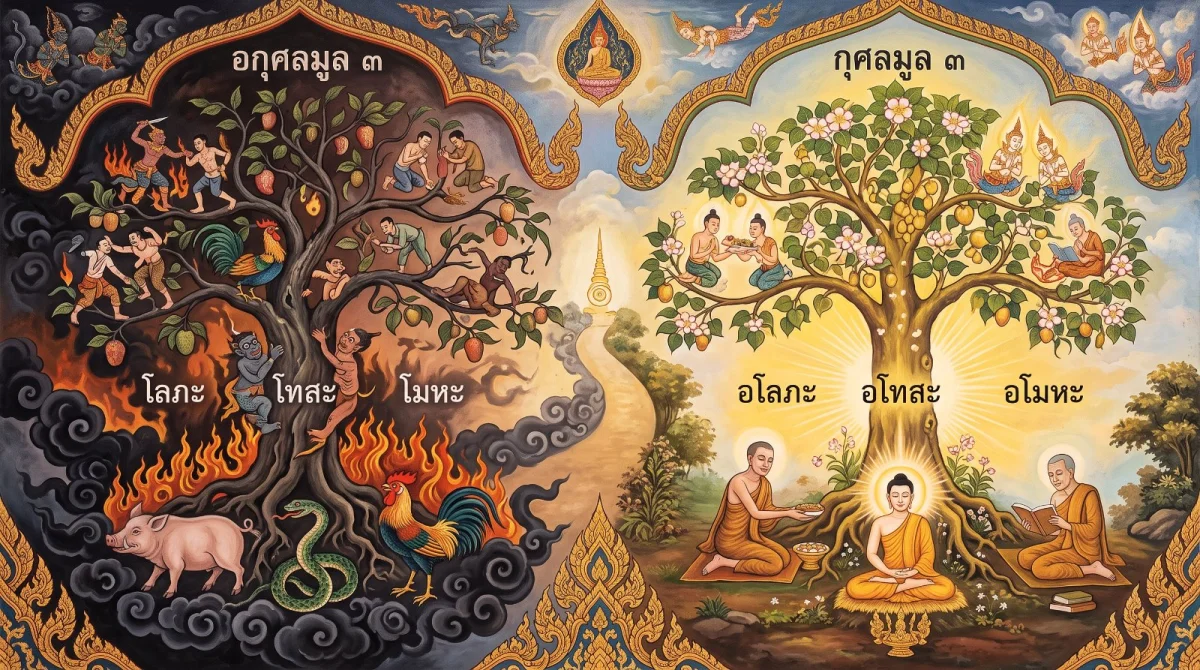
Three roots of wrongdoing — greed, hatred, delusion — and three roots of good — non-greed, non-hatred, non-del…

The Buddha's own criteria for checking whether something claimed as his word really is — whoever it is said to…

King Pasenadi asks about knowing and seeing everything, the four castes, devas and Brahmā. The Buddha says no …