
Suttas often chanted
Aciraṃ vatayaṃ kāyo — before long this body
Aciraṃ vatayaṃ kāyoA Dhammapada verse — before long this body will lie on the ground — chanted as a reflection for the living.



Aniccā vata saṅkhārā
The four-line verse chanted by monks while receiving the funeral cloth: conditioned things are impermanent, and having arisen they cease.
Monks chant this while the funeral cloth is offered, at the wake, at the cremation, and at memorial services. In Thai it is called bangsukul tai, the verse for one who has died.
Lay people can chant it too — at a place where ashes are kept, or on the anniversary of a death — and then dedicate the merit.
If grief makes chanting impossible, there is no need to force it. Sitting quietly is enough, and the words will keep until a steadier day.
The verse comes from the Mahāparinibbāna Sutta in volume 10. When the Buddha passed away, Sakka, lord of the devas, spoke it; the same verse also closes the Mahāsudassana Sutta.
It offers no reassurance that the departed has gone somewhere better. It says plainly that everything put together arises and falls apart, and its last line — their stilling is happiness — points to the peace that comes when one stops arguing with that.
Chanting it at a funeral is not a way of sending anyone off. It turns the living towards what Sakka saw that day: a death is the ordinary way of things, nobody's fault, and never a punishment.
Click to read the actual page it refers to
A Dhammapada verse — before long this body will lie on the ground — chanted as a reflection for the living.
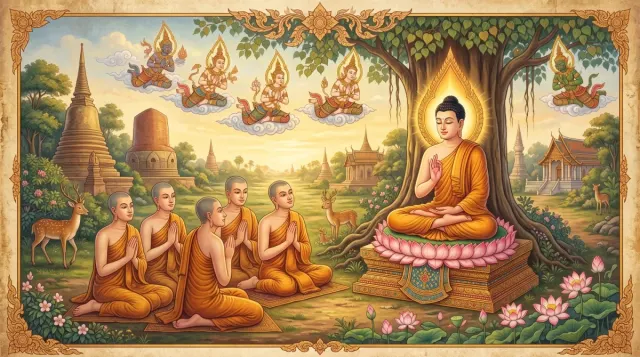
The Buddha's second teaching to the five monks: the five aggregates are not a self we can command, so they sho…
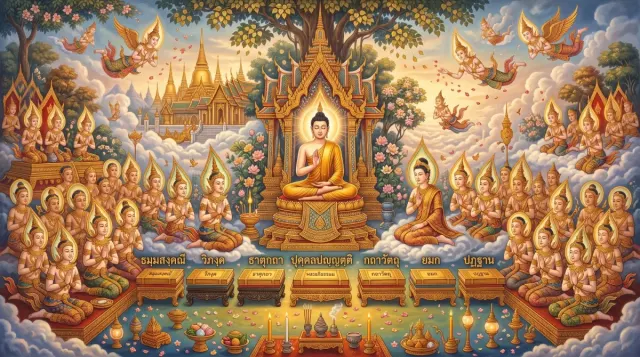
The opening passages of all seven books of the Abhidhamma, chanted by monks at Thai funerals and memorial serv…

The closing verses of the Bhāra Sutta: the five aggregates are a burden, picking it up is suffering, putting i…