
Daily chants
Requesting and undertaking the five precepts
PañcasīlasamādānaṃThe request for the precepts from a monk, followed by the undertaking of the five training rules one by one — …


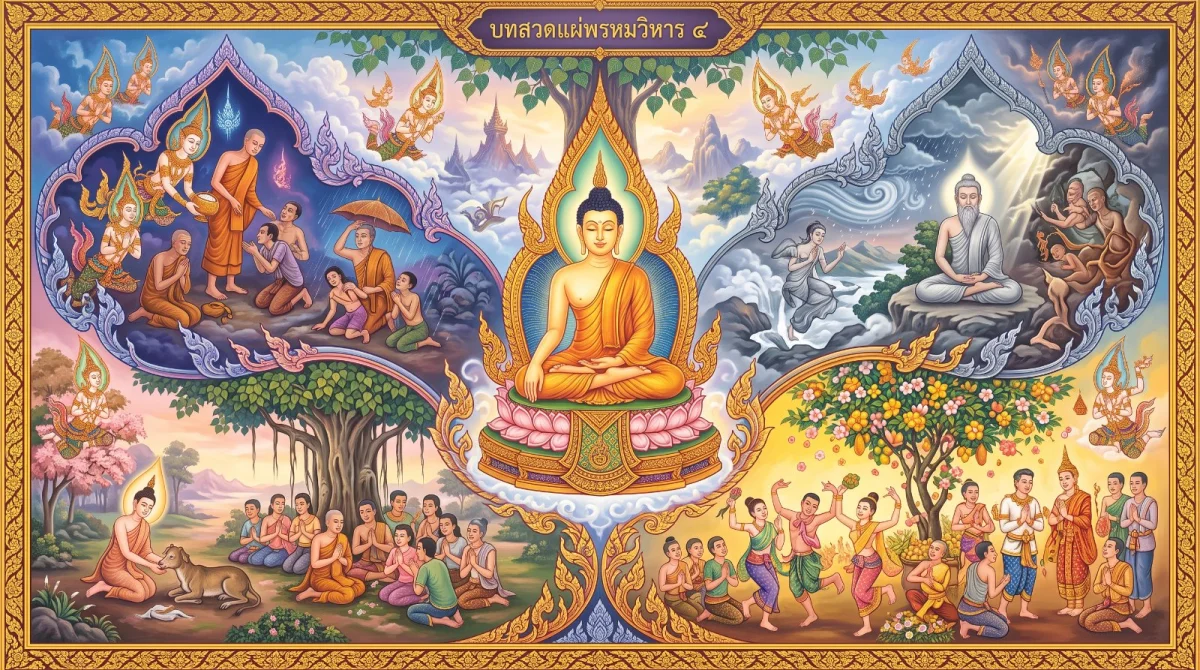
Brahmavihārapharaṇa
Spreading loving-kindness, compassion, gladness and equanimity to all beings — usually chanted to close a session of chanting or meditation.
Chanted at the end of a chanting session, after meditation, or before sleep. It is longer than the short metta chant because it covers all four qualities.
If you have time, chant it slowly and pause on each part: for loving-kindness think of someone you love, for compassion someone who is struggling, for gladness someone doing well, and for equanimity a situation you can no longer do anything about.
The four brahmavihāras are four attitudes the Buddha taught us to cultivate towards others: loving-kindness, the wish that they be happy; compassion, the wish that they be free from pain; gladness, delight when things go well for them; and equanimity, a steady heart when there is nothing more we can do.
The first three are easy to understand; the last is often misread. The equanimity section — that beings own their own actions — is a reminder to the chanter that we cannot act in anyone else's place, and that the results of an action belong to whoever does it. It is not a verdict that anyone deserves the suffering they are going through. When you have done all you can and it is still not enough, equanimity is what lets you keep helping without breaking.
These four sections are a Thai temple composition drawn from the brahmavihāra teachings in the suttas rather than a single passage lifted from the canon.
Click to read the actual page it refers to
The request for the precepts from a monk, followed by the undertaking of the five training rules one by one — …

The words for offering rag-cloth robes and the goods that accompany them to the Saṅgha, at a phā pā ceremony.

The short blessing that closes almost every chanting session and merit-making: may every blessing and well-bei…

The words a lay person says to invite the monks to begin chanting the parittas at a house blessing or other me…