
Evening chanting
Recollection of the Dhamma
DhammānussatiA short chant reviewing six qualities of the Dhamma, from being well proclaimed to being known for oneself.


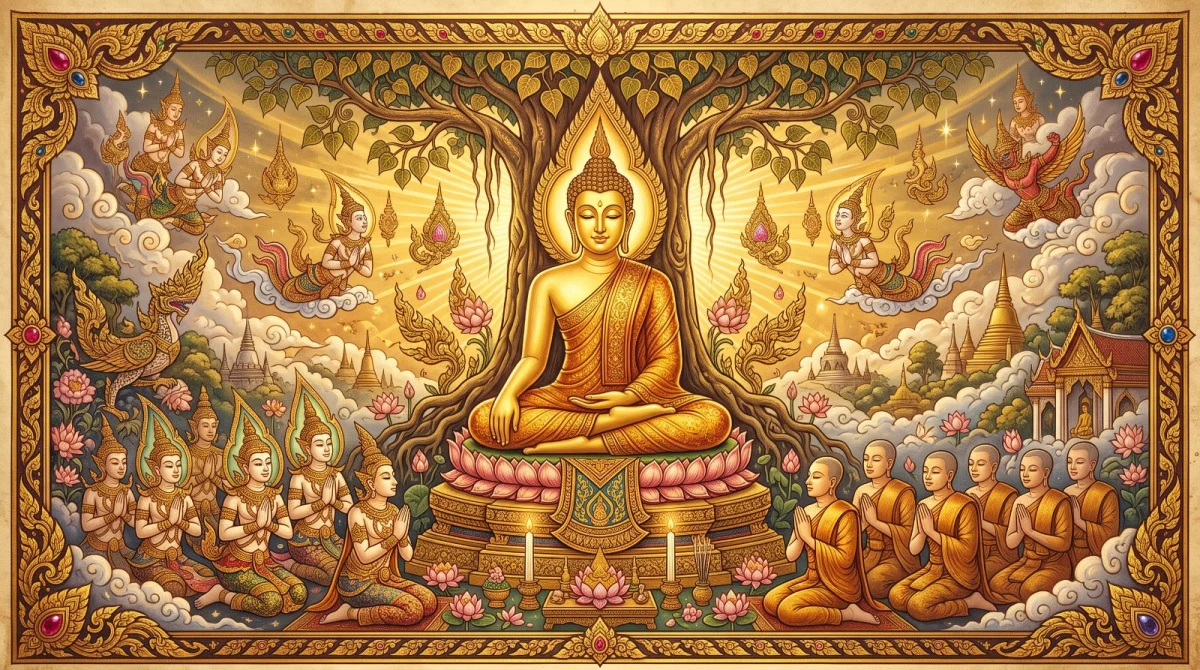
Buddhānussati
A review of the Buddha’s qualities in the wording found in the Tipiṭaka, chanted as the first of the three recollections in evening chanting.
Chanted straight after the offering to the Triple Gem, as the first of the three recollections: of the Buddha, of the Dhamma and of the Saṅgha.
In a temple a leader chants the first line, Handa mayaṃ… karoma se, which simply means let us now chant this. Everyone else joins from the second line. Chanting alone, you can skip the first line.
Anussati means calling something to mind again and again. The Buddha recommended recollecting the Triple Gem as a resting place for the mind. In the Anussatiṭṭhāna Sutta he says that while a noble disciple is recollecting the Tathāgata, the mind at that moment is not overcome by greed, aversion or confusion, but runs straight.
So this is not a spell. It is a way of picking up the Buddha’s qualities one at a time, from his freedom from defilement to his being a teacher of gods and humans. After the mind has rested there for a while, the scatter of the day usually settles by itself.
The opening words — such is the good report that has spread about him — recur in many suttas, describing what people of that time had heard about the Buddha before they decided to go and meet him.
Click to read the actual page it refers to
A short chant reviewing six qualities of the Dhamma, from being well proclaimed to being known for oneself.
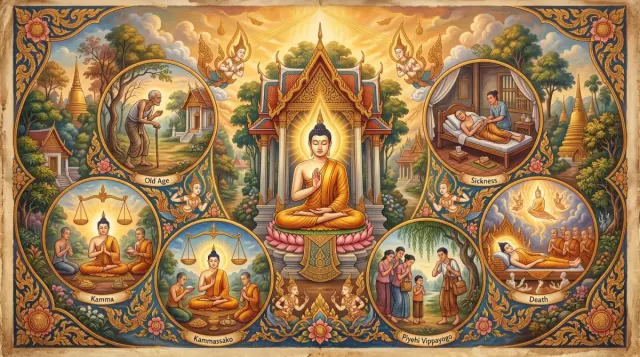
Five reflections on ageing, illness, death, parting and one’s own actions, often chanted at the close of eveni…

Verses praising the pure community of noble disciples, closing the recollections of evening chanting with an a…

A review of the qualities of the community of disciples who practise well and straightforwardly, the third of …