
Evening chanting
Buddhābhigīti — verses in praise of the Buddha
BuddhābhigītiVerses in praise of the Buddha chanted after the recollection, ending with an admission of any offence given.


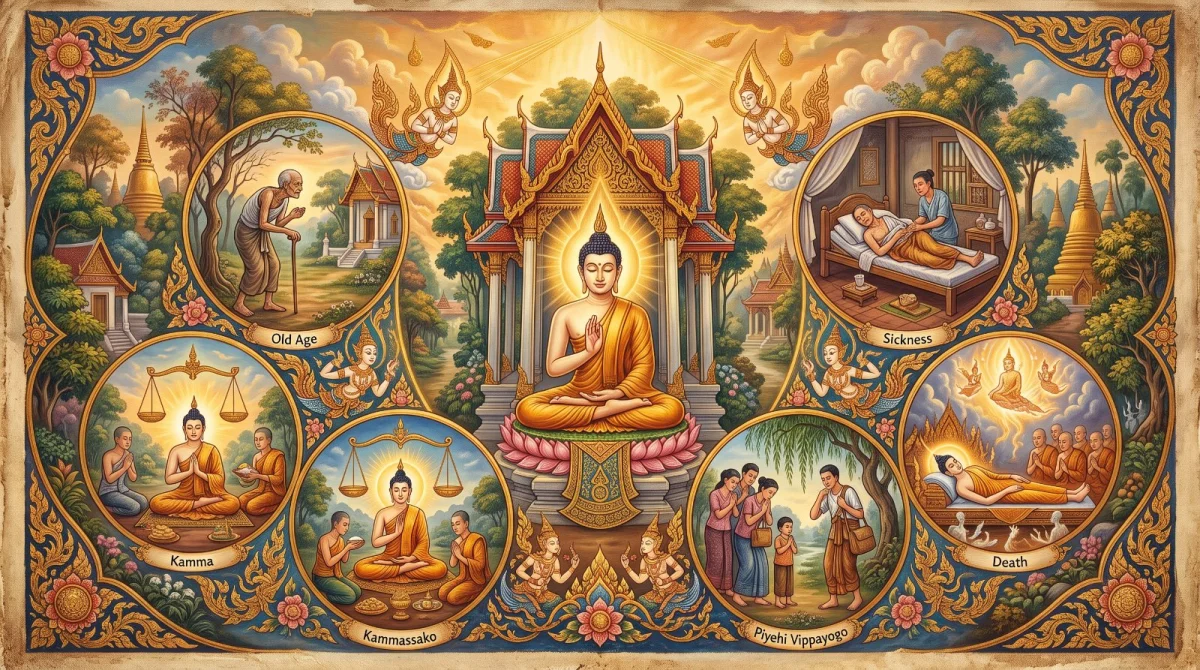
Abhiṇhapaccavekkhaṇa
Five reflections on ageing, illness, death, parting and one’s own actions, often chanted at the close of evening chanting.
Many temples chant this at the close of evening chanting, before meditation or before people go their separate ways; some chant it only on observance days.
It works at home too, especially on a night when the mind is still circling around something it cannot control. Saying these plain facts out loud often loosens the grip.
If chanting it leaves you heavy or too frightened to sleep, set it aside and chant loving-kindness instead. If distress becomes severe and you think of harming yourself, call the Thai mental health hotline 1323; outside Thailand, contact a local helpline.
These five come from a sutta in the Aṅguttara Nikāya, where the Buddha says that women and men, householders and monastics alike, should reflect on them often.
He also gives the reason: people become intoxicated with youth, with health and with life itself, and that intoxication leads them to act badly in body, speech and mind. Reflecting on these facts thins that intoxication out or ends it. The aim is not to frighten anyone, but to make the time you have count.
The last one, about your own actions, is about taking responsibility for what you yourself choose to do. It is not a tool for judging other people, as though their illness or hardship showed what they had done. The Buddha did not teach it to be used on anyone else's suffering.
Click to read the actual page it refers to
Verses in praise of the Buddha chanted after the recollection, ending with an admission of any offence given.

A short chant reviewing six qualities of the Dhamma, from being well proclaimed to being known for oneself.

A review of the qualities of the community of disciples who practise well and straightforwardly, the third of …

A review of the Buddha’s qualities in the wording found in the Tipiṭaka, chanted as the first of the three rec…