
Paritta (protective chants)
Khandha Paritta — goodwill towards snakes and creatures
KhandhaparittaṃA short chant of goodwill towards snakes and all creatures, which the Buddha allowed monks to use to look afte…


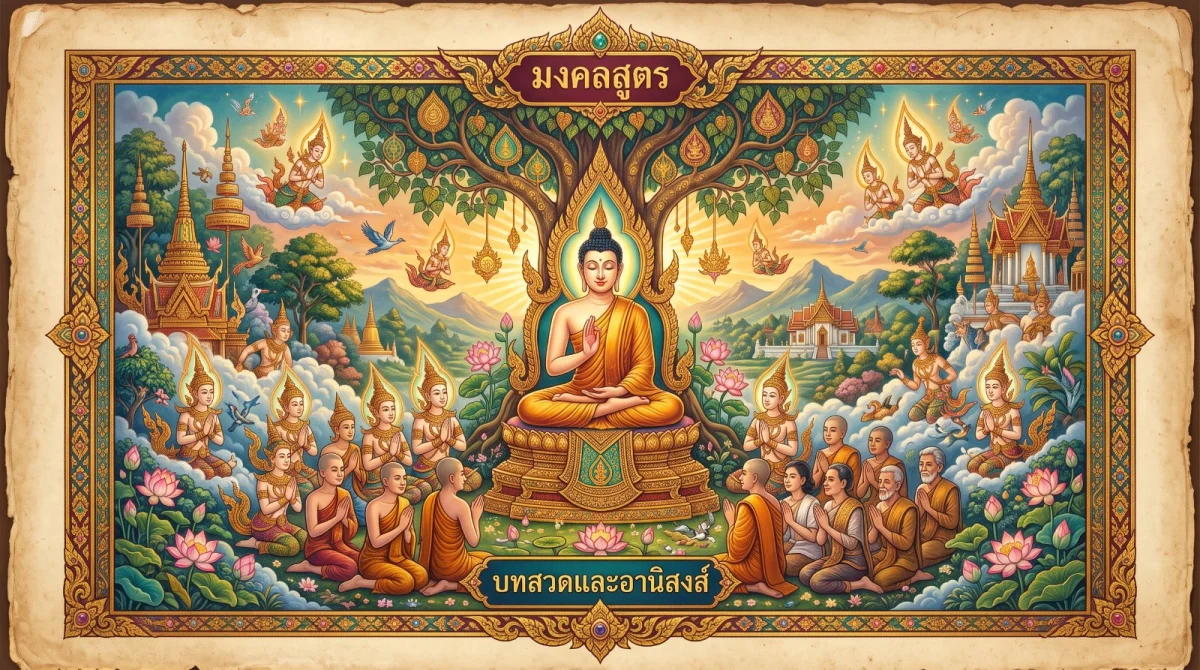
Maṅgalasuttaṃ
The sutta in which the Buddha answers a deity by listing what really counts as a blessing, from not keeping company with fools to a mind unshaken by the ways of the world.
This is the first chant in the traditional set of seven protective texts, and it is used at every kind of auspicious occasion: a new house, a wedding, a birthday merit-making, the opening of a shop, a house blessing.
You can also chant it at home. Alone, many people chant only the twelve verses, since that is where the content lies.
It works well as a periodic self-review: read the translation slowly and notice which items you are still weak on.
The Maṅgala Sutta stands in the Khuddakapāṭha, volume 25. A deity comes to the Buddha and says that people have argued about blessings for a long time — so what is the highest blessing? The Buddha answers in twelve verses that together list thirty-eight items.
What is striking is that not one of them is an object, an auspicious date or a charm. All thirty-eight are actions and qualities of mind, starting with something as ordinary as choosing your companions and ending with the realisation of Nibbāna.
The Pali here is taken from the Pali Tipiṭaka in this site's database, volume 25 — both the prose opening and all twelve verses.
Click to read the actual page it refers to
A short chant of goodwill towards snakes and all creatures, which the Buddha allowed monks to use to look afte…

The discourse on boundless loving-kindness: it begins with the qualities of someone who trains, then teaches g…

The discourse in which the Buddha tells monks to recollect the Buddha, the Dhamma or the Saṅgha when fear aris…

A chant that recites the seven factors of awakening. It is chanted at the bedside of the sick, following the G…