
Suttas often chanted
Dhammaniyāma Sutta — The Regularity of the Dhamma
Dhammaniyāmasuttaṃ (uppādasuttaṃ)A short sutta on the three truths that hold whether or not a Buddha appears: all formations are impermanent, a…


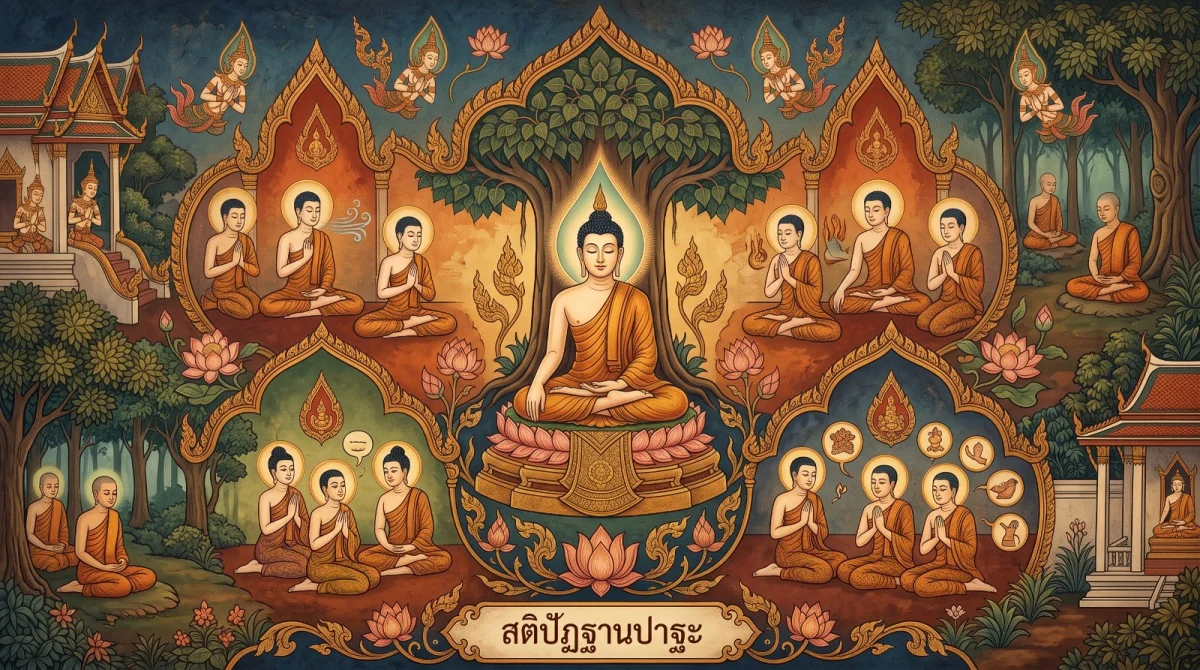
Satipaṭṭhānapāṭha
The opening of the Mahāsatipaṭṭhāna Sutta, setting out the four foundations of mindfulness — often chanted to review the method before sitting.
Chanted before sitting, as a way of reviewing where mindfulness is placed and how.
Many retreat centres use it to open the morning session: it is short enough to chant daily without eating into the meditation time.
The Mahāsatipaṭṭhāna Sutta is the central discourse on mindfulness. This chant is its uddesa — the section that states the headings before the sutta explains each one in detail.
The Buddha calls it the direct path: the way that leads to purity of heart, past sorrow and lamentation, to the ending of pain and grief, and to the realisation of nibbāna. He then names the four places where mindfulness is established: body, feelings, mind, and the objects of mind.
Each of the four carries the same three qualifiers: ardent enough not to drift off, clearly knowing what one is doing, and mindful — not losing hold of what is being watched — while setting aside liking and disliking towards the world.
Click to read the actual page it refers to
A short sutta on the three truths that hold whether or not a Buddha appears: all formations are impermanent, a…

The Buddha declares that the Dhamma has been made plain, so effort is worth making — the lazy live badly, the …
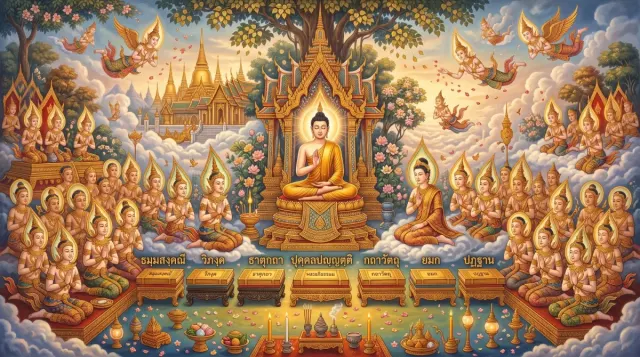
The opening passages of all seven books of the Abhidhamma, chanted by monks at Thai funerals and memorial serv…

The Buddha's third great teaching, given to a thousand former fire-worshippers at Gayāsīsa: eye, ear, nose, to…