
Suttas often chanted
Tirokuḍḍa Kaṇḍa — verses for dedicating merit to the departed
TirokuḍḍakaṇḍaṃVerses from the Khuddakapāṭha on giving in memory of departed relatives, chanted at memorial merit-making and …


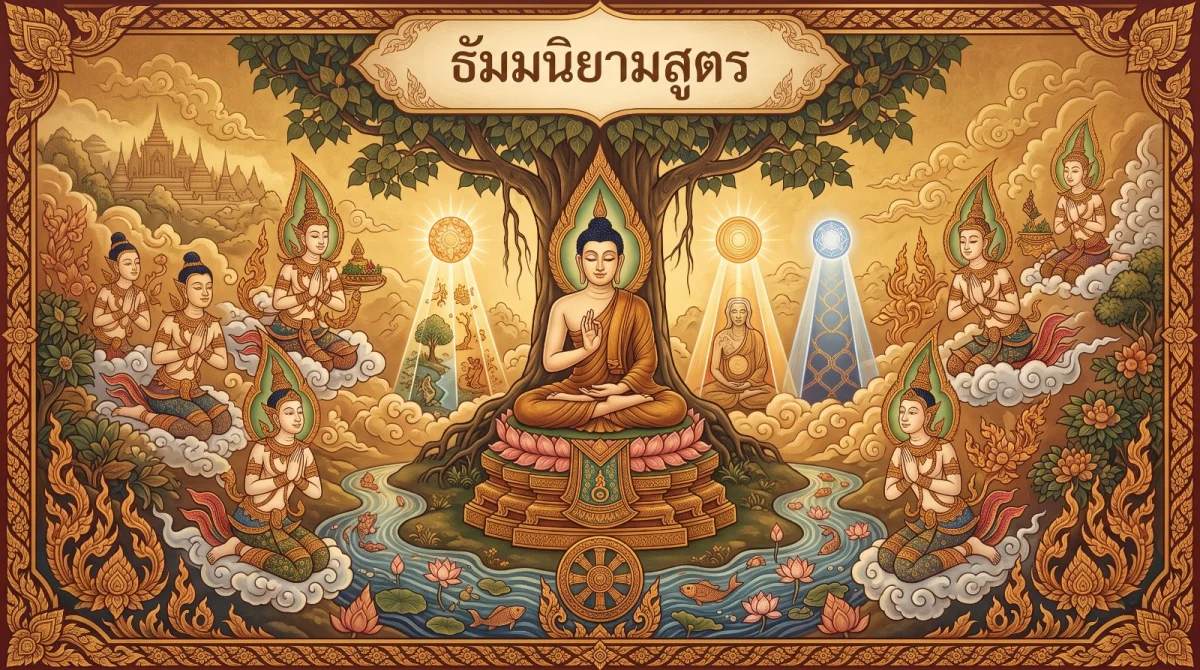
Dhammaniyāmasuttaṃ (uppādasuttaṃ)
A short sutta on the three truths that hold whether or not a Buddha appears: all formations are impermanent, all are suffering, and all things are not self.
Being short, it is often chanted at the end of evening chanting, or before sitting meditation to settle the mind.
Some temples use it at funerals and memorial services, because it speaks about impermanence plainly, without blaming anyone and without laying anything at the door of the person who died.
If you chant it alone, go slowly, perhaps three times, then sit quietly for a while. You will notice that the three statements match what is actually happening in the mind.
This sutta is in the Book of Threes of the Aṅguttara Nikāya, where it is called the Uppāda Sutta. In Thailand it is better known as the Dhammaniyāma Sutta, from the phrase dhammaniyāmatā in the text: the way things regularly are.
The content is very short. Whether or not a Tathāgata appears, the Buddha says, these three facts stand as they are. What a Tathāgata does is awaken to them and then tell, teach, make known, set out, reveal, analyse and make plain.
That sentence places the Buddha clearly: a discoverer and an explainer, not the maker of a rule. And it places the listener too — we do not have to believe because we were told; we can watch for ourselves whether what is put together really does change.
Click to read the actual page it refers to
Verses from the Khuddakapāṭha on giving in memory of departed relatives, chanted at memorial merit-making and …

The verses traditionally held to be the Buddha’s first utterance after awakening, comparing craving to a house…

The Buddha’s last words before his passing: all conditioned things wear away — complete your work with diligen…

The opening of the Mahāsatipaṭṭhāna Sutta, setting out the four foundations of mindfulness — often chanted to …