
Daily chants
Radiating loving-kindness
MettāpharaṇaWishing well to oneself and to all beings — usually chanted to close a chanting session or after meditation.


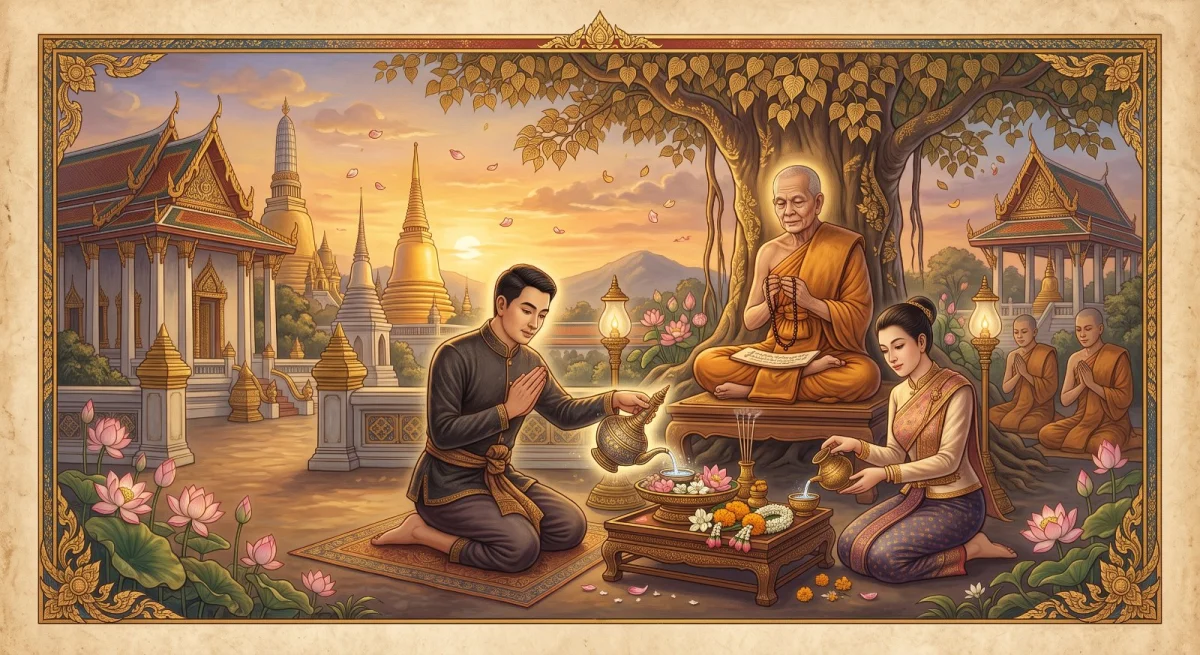
Pattidānaṃ
A short dedication said after making merit, offering the merit to relatives who have died, in the wording of the Tirokuḍḍa Kaṇḍa.
Said after giving, making merit, or finishing a chanting session. In Thai custom water is poured slowly into a vessel while the words are spoken, and afterwards poured out at the foot of a tree.
The water is an aid to attention, not the thing that carries the merit. With no water at hand, or at work, you can simply bring the person to mind and say the words.
It suits funerals, anniversaries of a death, and any ordinary day when someone who is gone comes to mind.
The Tirokuḍḍa Kaṇḍa in volume 25 describes departed relatives coming to the houses they once lived in, and says that when those left behind give a gift and dedicate it, the departed can rejoice in it. The sutta also says plainly that weeping and grieving do not help the dead, while giving and dedicating does.
The Pali used for the water-pouring in Thailand comes straight from this text. In the canon the line is spoken of another's relatives — idaṃ vo ñātīnaṃ hotu — while the chanted version says idaṃ me ñātīnaṃ hotu: may this be for my relatives.
The last two lines are a simile from the same passage: as full streams fill up the sea, so what is given here reaches those who have gone. That image is where the custom of pouring water while dedicating merit comes from.
Click to read the actual page it refers to
Wishing well to oneself and to all beings — usually chanted to close a chanting session or after meditation.

An old Thai composition, not part of the Tipiṭaka, which places the Buddhas and the great disciples around the…

The blessing monks give to those who have made an offering: freedom from misfortune, happiness, and growth tog…

The request for the precepts from a monk, followed by the undertaking of the five training rules one by one — …