
Morning chanting
Praise of the Dhamma
DhammābhithutiThe morning chant in praise of the Dhamma, stressing that it is something you can see for yourself here and no…


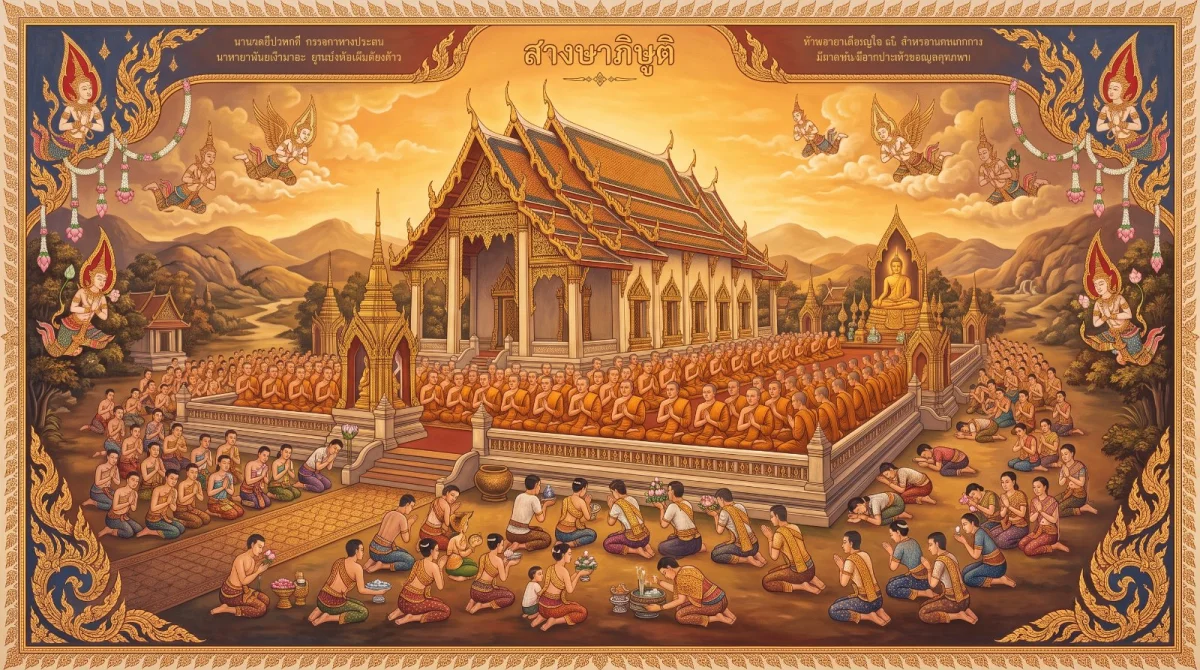
Saṅghābhithuti
The morning chant in praise of the Saṅgha — the community of disciples who have practised well and seen the truth for themselves.
Chanted after the praise of the Dhamma, closing the set of three praises in the morning service.
Many people find their teachers coming to mind while chanting it, which fits the meaning well: saṅgha here means the community of those whose practice has borne fruit, not an institution.
The chant lists four marks of how the disciples practise: they practise well, straightforwardly, for the sake of true knowledge, and with integrity. It then identifies them as four pairs of persons, eight individuals — those entering each of the four stages and those who have reached their fruit.
The closing lines say they are worthy of offerings, of hospitality, of gifts and of respect: an unsurpassed field of merit for the world. "Field of merit" is an image — giving to people of integrity is like sowing seed in good ground.
All of this wording comes from the Dhajagga Sutta. The Thai liturgy arranges it and ends, as in the two previous chants, with an expression of homage.
Click to read the actual page it refers to
The morning chant in praise of the Dhamma, stressing that it is something you can see for yourself here and no…

The passage that closes morning chanting: a review of dukkha, the impermanence of the five aggregates, and a r…

The morning chant in praise of the Buddha: who he was, what he came to know, and how he taught it.

The chant that opens morning chanting: offering flowers, incense and candles to the Buddha, the Dhamma and the…