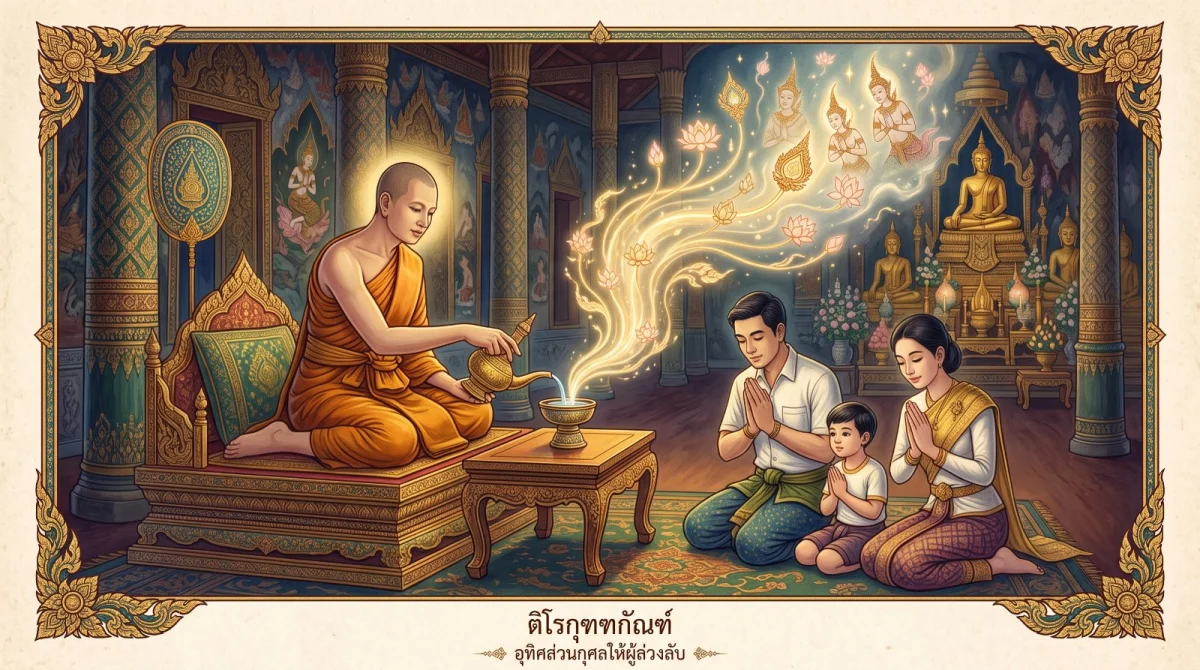
Tirokuḍḍa Kaṇḍa — verses for dedicating merit to the departed
Suttas often chanted

Tirokuḍḍa Kaṇḍa — verses for dedicating merit to the departed

Tirokuḍḍakaṇḍaṃ

Verses from the Khuddakapāṭha on giving in memory of departed relatives, chanted at memorial merit-making and at the festival for the dead.

When it is chanted

Chanted at memorial merit-making for someone who has died — the seventh day, the fiftieth, the hundredth, the festival for the dead, and death anniversaries.

The custom is to chant it after food or gifts have been offered to the monks, and then to pour the water of dedication. The line most people remember is 'idaṃ vo ñātīnaṃ hotu, sukhitā hontu ñātayo' — may this reach my relatives; may my relatives be happy.

You can also chant it at home without monks. Settle the mind, bring to mind the person you miss, and chant slowly.

Background

These verses come from the Khuddakapāṭha, the smallest book in the canon. Tirokuḍḍa means 'outside the walls'. The picture is of departed relatives standing outside the wall, at the crossroads, by the doorposts of what was once their home, while nobody remembers them.

The point of the verses is not the picture but what follows. Those who have gone cannot receive things from here. There is no farming there, no herding, no trade. The one thing that reaches them is the merit that those left behind make with care and dedicate to them — like rain falling on high ground and running down to the low.

Another verse says plainly that weeping, sorrow and lamenting do not help the departed; what helps is doing good and dedicating it. This is not a rule against grieving. Grief is what love does. It simply points out that when you are ready, there is something real you can still do for them.

Pali

  1. Tirokuḍḍesu tiṭṭhanti sandhisiṅghāṭakesu ca Those who have passed on stand outside the walls, at the wall-joins and the crossroads,
  2. Dvārabāhāsu tiṭṭhanti āgantvāna sakaṃ gharaṃ they stand by the doorposts, having come back to what was their own home.
  3. Pahute annapānamhi khajjabhojje upaṭṭhite When plenty of food and drink is set out, and dishes are prepared,
  4. Na tesaṃ koci sarati sattānaṃ kammapaccayā no one remembers them, because of the way kamma works for beings.
  5. Evaṃ dadanti ñātīnaṃ ye honti anukampakā So those who have compassion give in this way for their relatives,
  6. Suciṃ paṇītaṃ kālena kappiyaṃ pānabhojanaṃ with food and drink that is clean, fine, timely and suitable,
  7. Idaṃ vo ñātīnaṃ hotu sukhitā hontu ñātayo saying: may this reach my relatives; may my relatives be happy.
  8. Te ca tattha samāgantvā ñātipetā samāgatā And those departed relatives, gathered together there,
  9. Pahute annapānamhi sakkaccaṃ anumodare when there is plenty of food and drink, rejoice with respect:
  10. Ciraṃ jīvantu no ñātī yesaṃ hetu labhāmhase may our relatives live long, for it is through them that we receive this.
  11. Amhākañca katā pūjā dāyakā ca anipphalā Honour has been paid to us, and the givers are not without fruit.
  12. Na hi tattha kasi atthi gorakkhettha na vijjati For there there is no farming, and no herding of cattle,
  13. Vaṇijjā tādisī natthi hiraññena kayākayaṃ no trade as there is here, no buying and selling with money.
  14. Ito dinnena yāpenti petā kālakatā tahiṃ Those who have died there live on what is given from here.
  15. Unnate udakaṃ vuṭṭhaṃ yathā ninnaṃ pavattati As rain falling on high ground flows down to the low,
  16. Evameva ito dinnaṃ petānaṃ upakappati so what is given from here reaches those who have passed on.
  17. Yathā vārivahā pūrā paripūrenti sāgaraṃ As full rivers flow on and fill the ocean,
  18. Evameva ito dinnaṃ petānaṃ upakappati so what is given from here reaches those who have passed on.
  19. Adāsi me akāsi me ñātimittā sakhā ca me Remembering: he gave to me, he did this for me, he was my relative, my friend, my companion,
  20. Petānaṃ dakkhiṇaṃ dajjā pubbe katamanussaraṃ one should give a gift for the departed, recalling what they did before.
  21. Na hi ruṇṇaṃ vā soko vā yāvaññā paridevanā For weeping, sorrow and any other lamenting
  22. Na taṃ petānamatthāya evaṃ tiṭṭhanti ñātayo are of no use to the departed, even though relatives go on that way.
  23. Ayañca kho dakkhiṇā dinnā saṅghamhi supatiṭṭhitā But this gift, well placed in the Saṅgha,
  24. Dīgharattaṃ hitāyassa ṭhānaso upakappati is of immediate benefit to them, and of benefit for a long time.
  25. So ñātidhammo ca ayaṃ nidassito So the duty towards relatives has now been shown,
  26. Petānapūjā ca katā uḷārā great honour has been paid to those who have passed on,
  27. Balañca bhikkhūnamanuppadinnaṃ strength has been given to the monks,
  28. Tumhehi puññaṃ pasutaṃ anappakanti and the merit you have made is far from small.

Other chants

Log in to earn 20 merit points for reading this page