
Paritta (protective chants)
Āṭānāṭiya Paritta — homage to the seven Buddhas
ĀṭānāṭiyaparittaṃHomage to the seven Buddhas, an extract from the Āṭānāṭiya Sutta, commonly chanted to close the set of seven p…


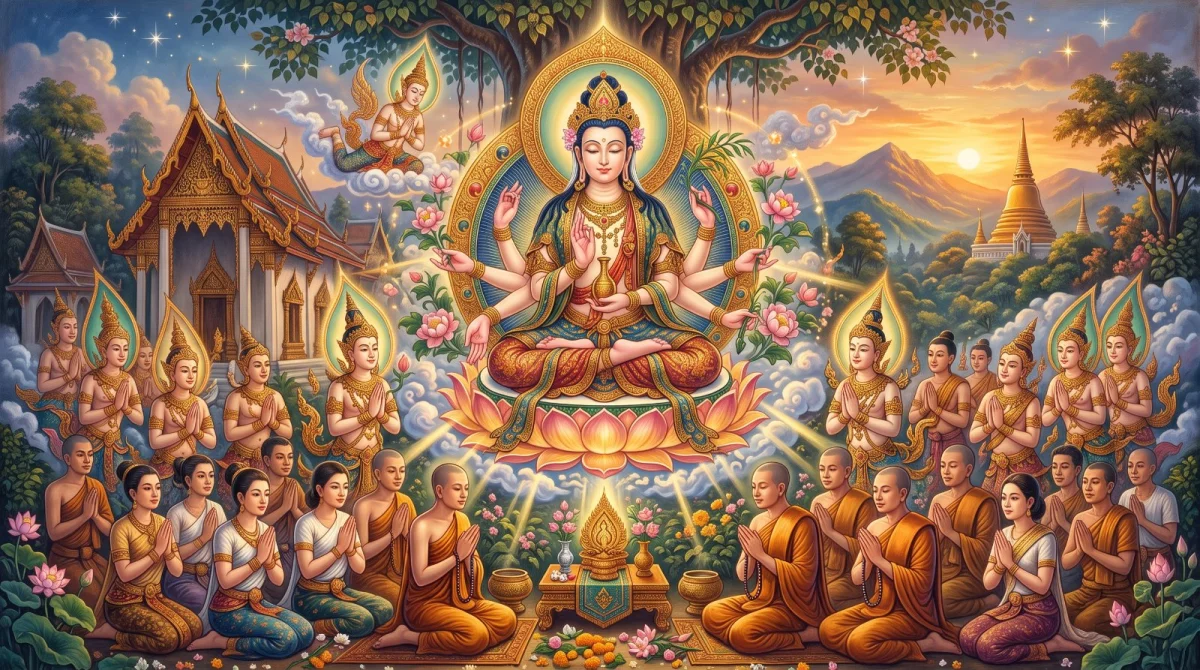
Mahākāruṇiko nātho
The blessing chanted straight after the Jayamaṅgala Gāthā, closing with the verse from the Supubbaṇha Sutta: the time you act well is itself the auspicious time.
Almost always chanted straight after the Jayamaṅgala Gāthā (Bāhuṃ) — the pair is so fixed that Thai people name them together. It is used at ordinary auspicious occasions: weddings, house warmings, birthday merit-making, the opening of a shop, and blessings at home.
In a ceremony the monks chant it as a blessing for the hosts. The word te in the verses means 'to you', so it is spoken by the chanter to the listener. Chanting it yourself at home is fine too; it then reads as a wish for yourself and the people around you.
It is usually followed by Bhavatu Sabbamaṅgalaṃ, and then by the pouring of water to dedicate merit.
Note for the reviewer: in line 11 chanting books read paṇidhī te padakkhiṇā with a long ī, as used here, while the Thai royal edition of the canon in volume 20 has paṇidhi te padakkhiṇā, with a footnote giving paṇidhiyo in the European edition. In line 8 the same footnotes give suvuṭṭhitaṃ for suhuṭṭhitaṃ. In line 5 some books print evaṃ tavaṃ vijayo hohi without the conjunct mark under the t.
This is not a sutta. It is a liturgical chant assembled from three separate sets of verses, and it reads best in those three parts.
The first three lines are a 'truth-statement' verse: a fact is stated and then invoked as a blessing. The fact here is that the Buddha fulfilled the perfections for the welfare of all living beings and reached awakening. The next four lines are the Jaya Paritta, recalling the awakening at the foot of the Bodhi tree on the seat no one could defeat, and wishing the listener a victory of the same kind. Both sections are later compositions; this wording is not found in the Tipiṭaka.
The last five lines, from sunakkhattaṃ sumaṅgalaṃ to the end, are the verse of the Supubbaṇha Sutta in the Aṅguttara Nikāya, volume 20, quoted as it stands in the canon. That sutta answers the question of auspicious timing directly: for anyone who acts well in body, speech and mind at a given time, that is their good morning, their good noon, their good evening. The word padakkhiṇa, repeated at the end, literally means keeping something on your right as you pass it — a gesture of respect — and from there it came to mean doing a thing the right way. So the verse does not name a lucky hour; it says what makes an hour a good one.
Click to read the actual page it refers to
Homage to the seven Buddhas, an extract from the Āṭānāṭiya Sutta, commonly chanted to close the set of seven p…

A short chant of goodwill towards snakes and all creatures, which the Buddha allowed monks to use to look afte…

A short chant for after a bad dream or an unsettling sign, asking that the unease dissolve through the power o…
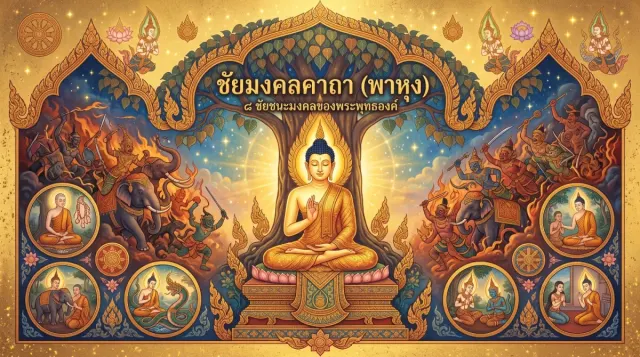
Eight verses recalling eight occasions when the Buddha overcame something formidable without violence, each cl…